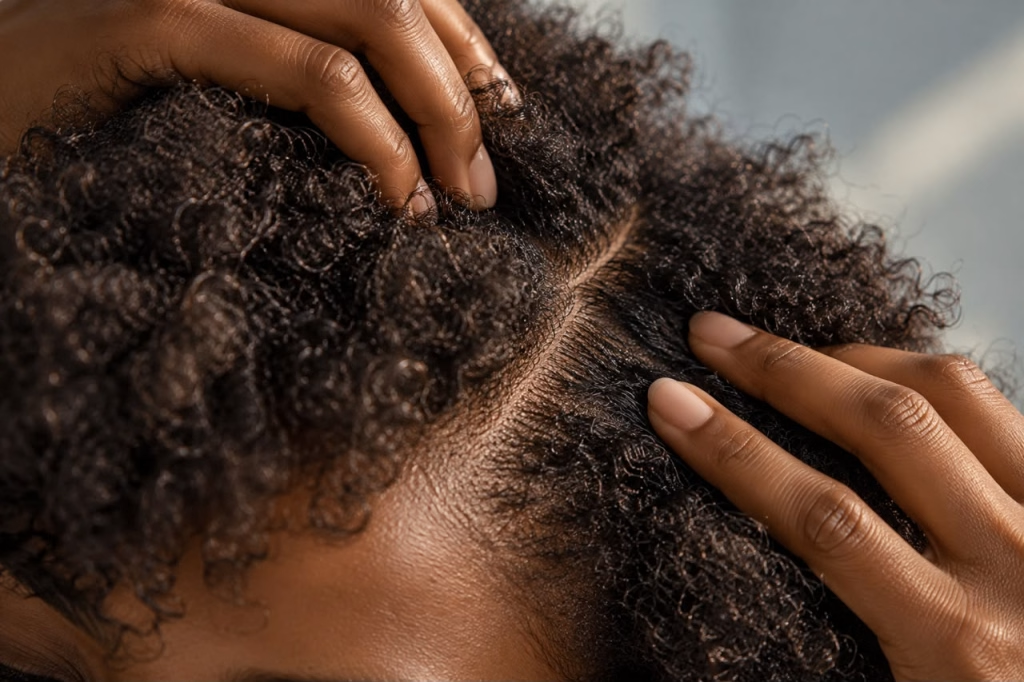
There is a particular way a woman says it. She sits down and before anyone has touched her head, she offers the diagnosis herself, in the tone of someone reporting the weather. My hair is dry.
She has said this for years. She may have said it since secondary school. Somewhere along the way it stopped being a description of a condition and became a description of herself, the way one might say I have my mother’s hands. It is simply the kind of hair she has. Dry hair. Difficult hair. Hair that drinks and drinks and gives nothing back.
Here is the thing nobody tells her. Four separate problems produce that exact sensation and in the palm of your hand they are indistinguishable. She has been treating one of them for a decade. Usually it is not the one she has.
Before the four, the reflex, because the reflex is the reason the four matter.
Dry means “oil my hair”. This is not something anyone taught you in a lesson. It arrived the way most things about hair arrive, through the hands of women who loved you, in the smell of a
particular tin, on Sunday evenings before school. There is real tenderness in that inheritance and I would not take it from anyone.
But oil sits on the outside. It coats. It shines. It makes hair feel, for about a day, like the problem has been addressed. What it does not do is put water into a strand that has none, because oil is not water and hair is not thirsty for grease. If the dryness returns quickly, you have not failed to apply enough. You have applied the wrong thing with great commitment.
That is the loop. And the loop is expensive, because every month spent inside it is a month the actual problem continues quietly doing what it does.
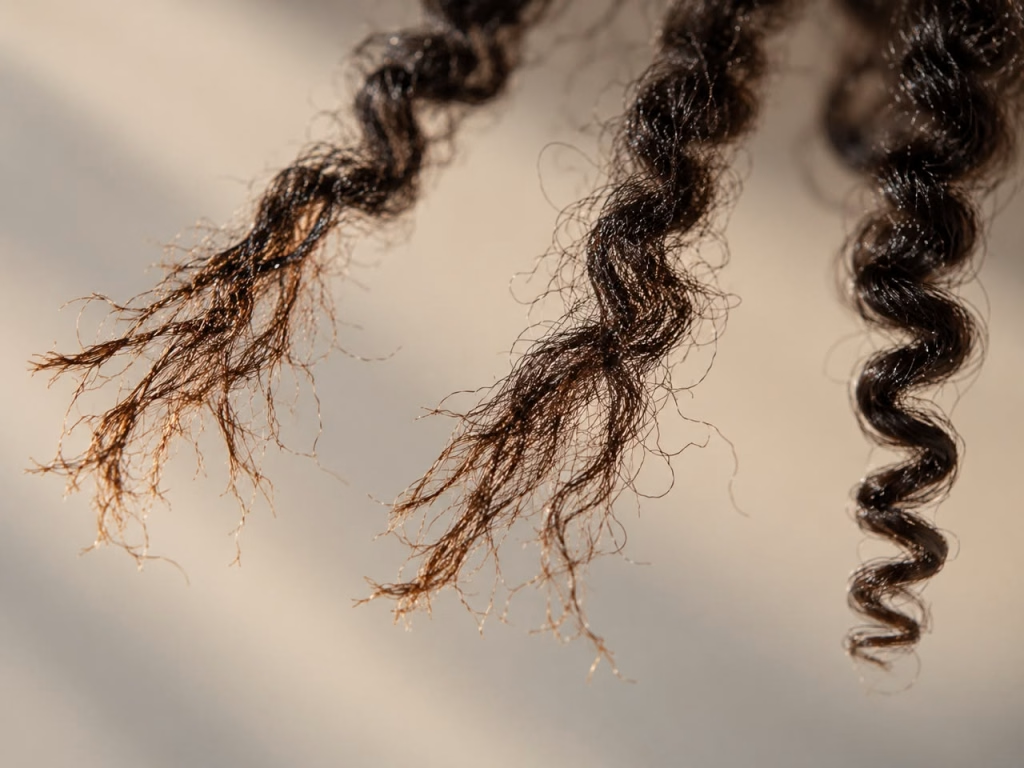
Some dryness is not dryness. It is damage that has already happened, sitting at the tips of your hair, refusing to leave.
Ends split. They fray, they roughen, they lose the ability to hold anything. And because the damage is at the tips, it breaks off, taking healthy hair with it a little at a time. You are not losing length. You are defending it.
I understand why. That length took two years. It took discipline and patience and a certain amount of pain. The idea of handing an inch of it to a pair of scissors feels like being asked to give back something you earned. Every woman I have met who resists a trim is resisting for a rational reason.
The arithmetic is simply against her. Held onto, damaged ends will cost you more length across a year than the trim would have cost you in an afternoon.
The Second Kind: Hair That Is Not Being Washed Enough

This one surprises people, which is how you know it is worth saying.
The fear of washing is real and it has a history. Washing was disruptive. Washing meant a whole day. Washing meant tangles and time and the loss of a style you had paid for. So the interval stretched. Two weeks. Three. Longer, under extensions.
Meanwhile the scalp keeps doing what skin does. It sheds, it produces oil, it collects the city. Lagos is dust and humidity and hard water, and all of it accumulates. By week three you are applying leave-in conditioner onto a surface that is already fully occupied.
Water is the hydration. Everything else in your routine exists to hold water in place. A wash is not an interruption of your hair care. Most of the time it is the whole of it.
The Third Kind: Hair That Has Been Sealed Shut

This is the one that produces the most despair, because it looks like the products have stopped working.
They have not. They are simply no longer reaching anything.
Minerals from hard water bind to the strand. Silicones layer over one another. Residue from extensions, from gel, from months of product applied faithfully on top of product, builds into a
film that behaves like a lid. Underneath it the hair may be in reasonable condition. It is just sealed off from everything you are doing for it.
A woman came to us last year having spent eighteen months buying steadily more expensive things, on the theory that better products would eventually break through. Nothing was reaching
her hair. When we cleared the coating, the products she already owned began to “work” within a week. She had not been careless. She had been diligent in the wrong direction.
The Fourth Kind: Hair That Has Genuinely Lost The Ability To Hold Water
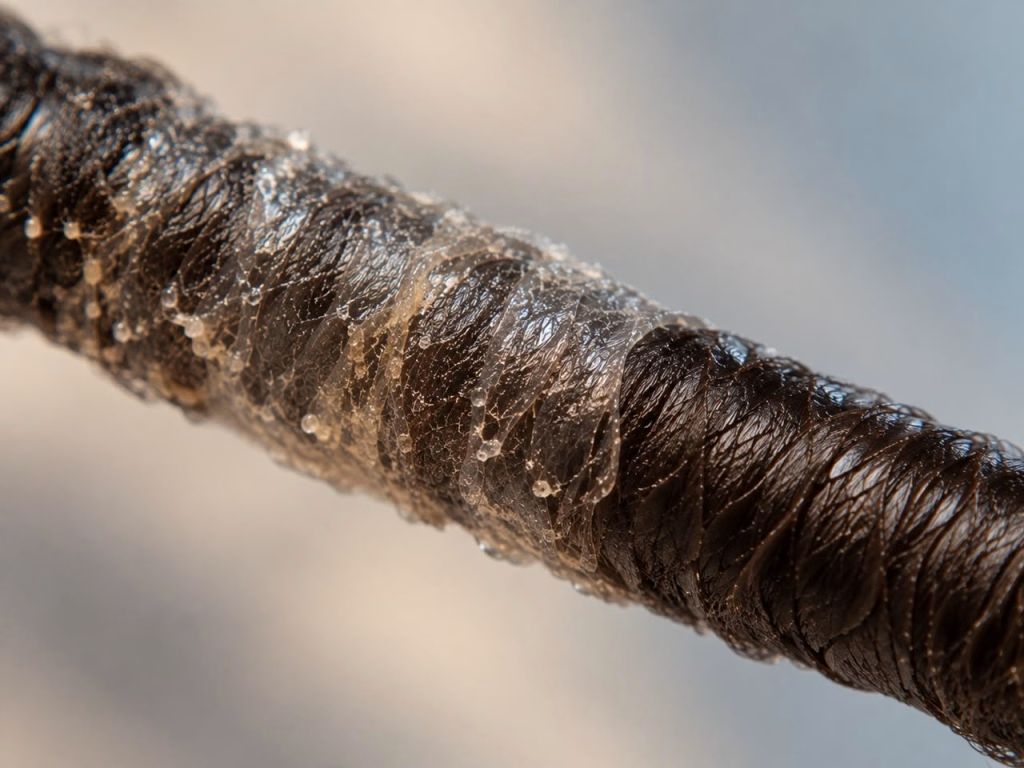
Only this one is actually dryness in the sense people mean.
The cuticle is a layer of overlapping scales along the outside of every strand. When it lies flat, water stays where it is put. When it has been lifted or eroded, by heat, by colour, by relaxer, by years of handling, water goes in easily and leaves just as easily. The hair drinks and drinks and
is dry again by evening.
This is the one that takes time. Not one appointment. A course of treatment, measured across months, with the handling adjusted in between. Nothing is bottled that will do it in a week.
Why It Matters Which One You Have
Because the treatments do not overlap. They correct each other.
Protein on the fourth kind helps. Protein on the second kind stiffens hair that is already brittle, and stiff hair snaps. Heavy oil on the third kind adds another layer to the lid. Deep conditioning on the first kind is money spent on ends that need to come off.
This is the quiet cost of guessing. Not that nothing happens, but that the wrong thing happens with real force, and the hair moves further from where you want it while you are actively caring for it. That is the part women find hardest to hear, and it is also the part that should be a relief. If you have been trying for years and getting nowhere, the most likely explanation is not that you have bad hair. It is that you have been solving a problem you do not have.
Coming Back To It
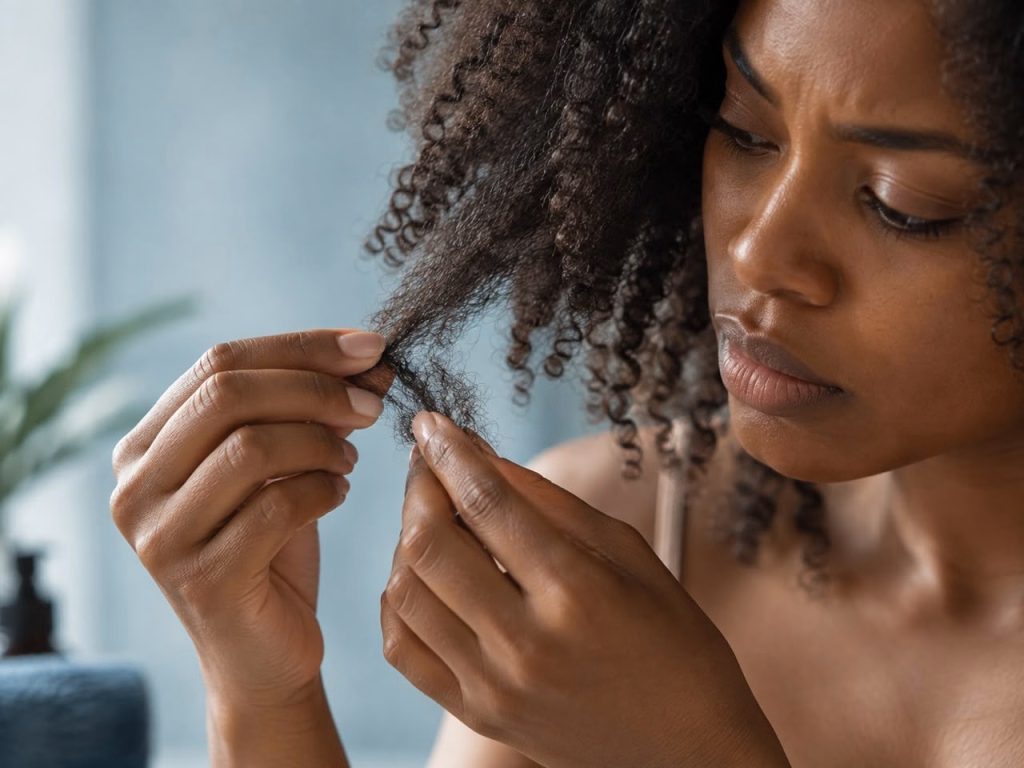
There is a kind of estrangement that sets in after long enough. You stop looking. You cover it, you tie it, you make peace with the version of it you believe you were given. Plenty of women arrive here having quietly decided the matter years ago and not one of them arrived at that conclusion foolishly.
They arrived there because nobody ever looked properly and told them the truth about what was actually happening.
In your hands, all four feel the same. Under magnification they do not. That is the entire job.
Tresses Lagos Trichology
Every visit begins with a complimentary consultation with one of our trained hair therapists. If something seems wrong, book a trichology consultation.
Subscribe to our weekly newsletter for expert tips and tricks on healthy hair care and get our free Hair PlayBook.
