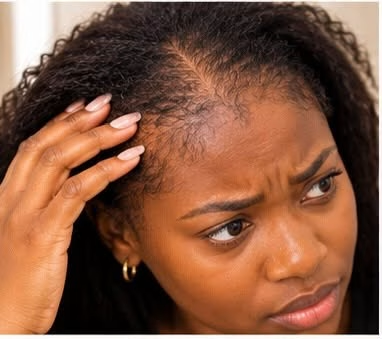
You notice it on a Sunday evening with your hair freshly parted. The line looks wider than it did last year. Your ponytail takes an extra turn of the band. In photographs your temples sit further back than you remember.
You put it down to a hard few months, the braids or the water. That is a fair first guess. It is also one you can check. Thinning leaves a pattern and the pattern can be read. The sooner you read it the more there is to work with.
● Thinning at the edges and temples usually points to tension from styles.
● Thinning at the parting or crown usually points to the follicles themselves, often with a family pattern.
● Heavy shedding all over usually points to something that happened two or three months ago.
● A crown that spreads outward, with soreness or breakage, needs looking at soon.
● Stress and nutrition feed into every one of these.
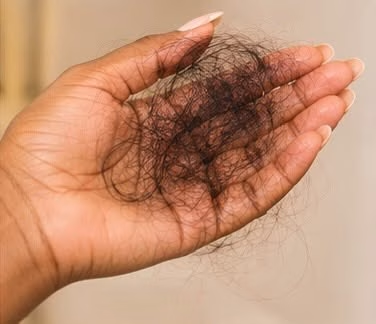
Everyone sheds. The American Academy of Dermatology puts the usual figure at 50 to 100 hairs a day. After a take-down or on wash day the number can look alarming, because hair that was already loose comes away together. Shedding is hair leaving. Thinning is hair that comes back finer, shorter or not at all.
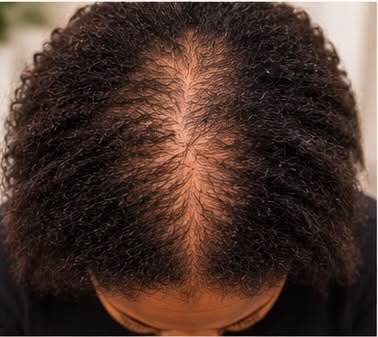
More hair in the sink or on the brush over a few weeks points to shedding. A wider parting, a smaller ponytail or edges that sit further back point to thinning. The two can happen together. Each has its own causes and needs its own plan.
What to do next: Photograph your parting, crown and edges once a month in the same light and the same position. If the photographs change, it is thinning.
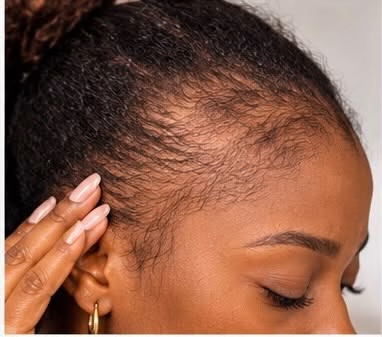
Look first at tension. Braids, ponytails, wigs, lace fronts and weaves all pull on the hairline, which holds the finest hairs on your head. Soreness, small bumps along the hairline and hair that breaks short in one spot are the early signs.
This is common here. A study of 207 adult women in a Lagos community found thinning from tension at the hairline, known as marginal traction alopecia, in more than three quarters of them. You are in very large company. There is also a lot you can do.
If the style you love is the one pulling at your edges, the style is what has to change. Caught early, thinning from tension can recover once the strain is taken off. After years of pulling on the same spot, the follicle can scar and the hair stops coming back.
What to do next: Rest your edges. Take the tension off for good where you can. When you do wear a style, ask for far less pull. Soreness means too tight. Then book a Trichology Consultation so we can see how much of the hairline is still working. Regenerative treatments, such as microneedling with exosomes, can support the follicles that remain.
Why Is My Parting Getting Wider?
Look at the follicles. In patterned thinning, which often runs in families, the follicles shrink over time. Each growth cycle produces a hair a little shorter and a little finer than the one before until the parting shows more scalp. The front hairline often stays where it is. Hormones play a part. Menopause can make it more noticeable.
What to do next: Photograph your parting monthly in the same light and book a Trichology Consultation. Under the microscope we can see how fine the hairs have become and how many follicles are still producing. Our Follicle Support Treatments which include including laser light therapy is built around the follicles that are still active. Starting early matters.
Why Is My Hair Shedding So Much?
Look back three months. Illness, childbirth, surgery, a significant loss, a sudden change in diet or a new medication can push many hairs into their resting phase at once. They then shed together, usually two to three months later, which is why the cause is often forgotten by the time the hair shows it. This is called telogen effluvium. It usually settles within three to six months once the cause has passed.
What to do next: Write down what happened in the three months before the shedding began and book a Trichology Consultation. We guide you on which tests to have, whether iron, thyroid or something else. We also look at why the hair is slow to refill.
Can Stress Cause Hair Thinning?

Yes. Stress is a fair suspect for shedding, because a hard season can push many hairs into their resting phase together. It is a less likely cause of a parting that has widened slowly over two years. Stress-related shedding is temporary and the hair returns once the pressure eases.
What to do next: Treat sleep, regular meals and a steady routine as part of your hair care for the next few months. Do not buy a new product for every strand you see.
Does What You Eat Affect Your Hair?

It does. Hair is made largely of protein and the follicle needs a steady supply of fuel to build it. Low iron, low vitamin D and too little protein are among the deficiencies most often linked to thinning. Crash diets and rapid weight loss can also trigger shedding.
A plate that supports your hair is ordinary: eggs, fish, beans, leafy greens such as ugu and efo, nuts and plenty of water. Food does not reverse patterned thinning or scarring. It keeps the ground in good order for everything else you do.
What to do next: Book a Trichology Consultation and we guide you on which tests to have, including iron (ferritin) and vitamin D, before you buy supplements. Take them only if the results say you need them.
What Is CCCA And How Do I Spot It?
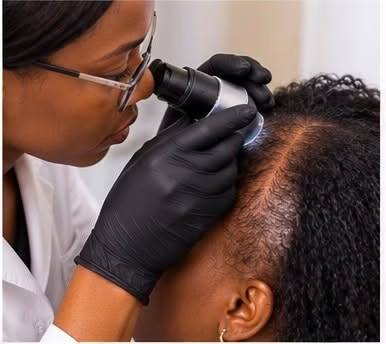
If thinning begins at the centre of your crown and spreads outward in a circle, look into it early. Some women feel itch, tenderness or burning there. Many feel nothing at all. Hair that breaks at the crown before it visibly thins is often the first sign.
This pattern is central centrifugal cicatricial alopecia, or CCCA. It is the most common scarring hair loss in Black women and usually shows between the thirties and fifties. It is called scarring because scar tissue replaces the follicle. That cannot be undone, which is the reason to act early. Caught early, the aim is to protect the follicles you still have.
What to do next: If your crown is thinning outward or breaking, book a Trichology Consultation soon. Do not wait for a quiet month.
What Is Happening In The Follicle?
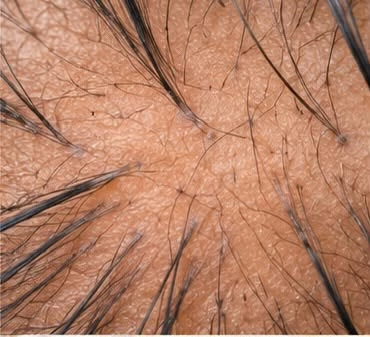
Every follicle moves through a cycle: a long growing phase, a short transition and a resting phase, after which the hair sheds and a new one begins. Thinning is a change in how that cycle runs. The growing phase shortens, the hair comes in finer or the follicle stops producing a hair at all.
Under the microscope we can see this. We look at the width of the hairs, how many fine hairs sit beside thicker ones, whether every follicular opening is present and how the skin around them looks. A follicle that is still there can be supported. A follicle lost to years of tension or inflammation cannot be brought back.
Early intervention is key. Taking the strain off your hairline gives your hair the chance to recover. After years of the same pull, the loss can be permanent.
What to do next: Do not wait for things to settle. Booking sooner gives you more follicles to work with.
What Usually Gets Blamed?
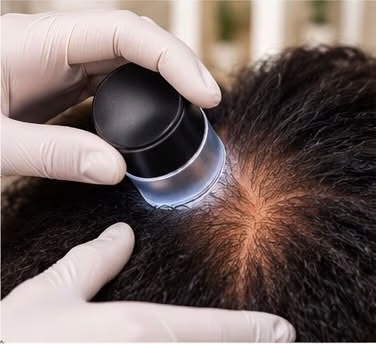
Stress comes first, then the braids, the water, the relaxer, the products, the wig and age. Each has a sensible basis and each may be part of the story. None of them can tell you what is happening in your own scalp.
Oils and growth products can look after the lengths. Moisture and gentle handling keep the hair you have already grown. They do not decide what the follicle produces. Thinning happens at the follicle.
What to do next: Before you spend another month on products, have your scalp looked at under magnification.
Signs To Act On Sooner
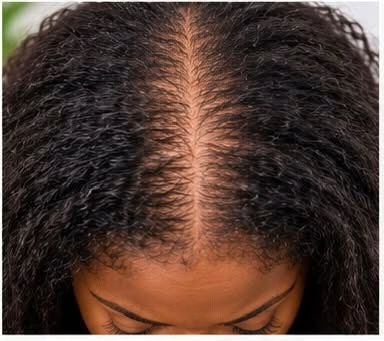
Come in without waiting for a quiet month if you notice any of these:
● Hair loss that is rapid or unusual for you
● Patches rather than an even thinning
● A scalp that is painful, burning or tender
● Pustules or crusting
● Smooth shiny areas where the follicle openings seem to have disappeared
Some of these need a medical opinion as well as ours. Where that is the case we tell you and point you to our clinical partner.
What Does A Trichology Consultation Involve?

A Trichology Consultation is where we start for any thinning concern. The trichologist examines your scalp and hair under magnification and takes a detailed history that covers your health, medications, family, diet, stress and the way you style. She then puts the findings together into one picture. She explains what is happening and why. She writes a programme built around your pattern and your scalp. Treatment can begin straight afterwards. At each review we look at how your follicles have responded and adjust the plan. If you would like to begin with a look under the microscope alone, you can book a Microscopic Analysis with our technicians.
You have already done the first part by noticing. Book a Trichology Consultation through the link below or chat with us on WhatsApp.
Tresses Lagos Trichology
Subscribe to our weekly newsletter for expert tips and tricks on healthy hair care and get our free Hair PlayBook.
